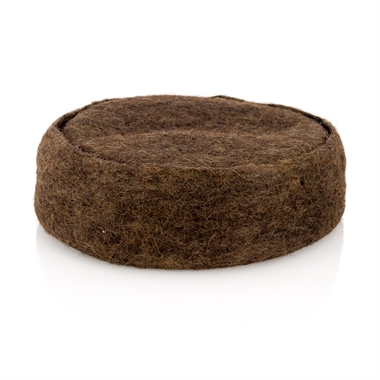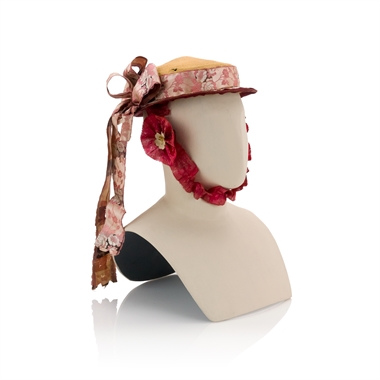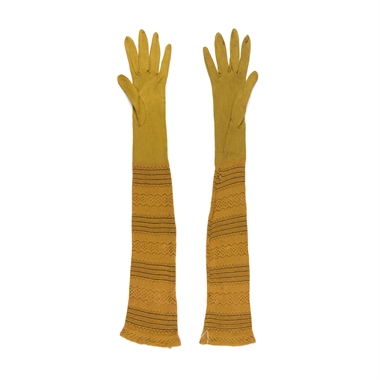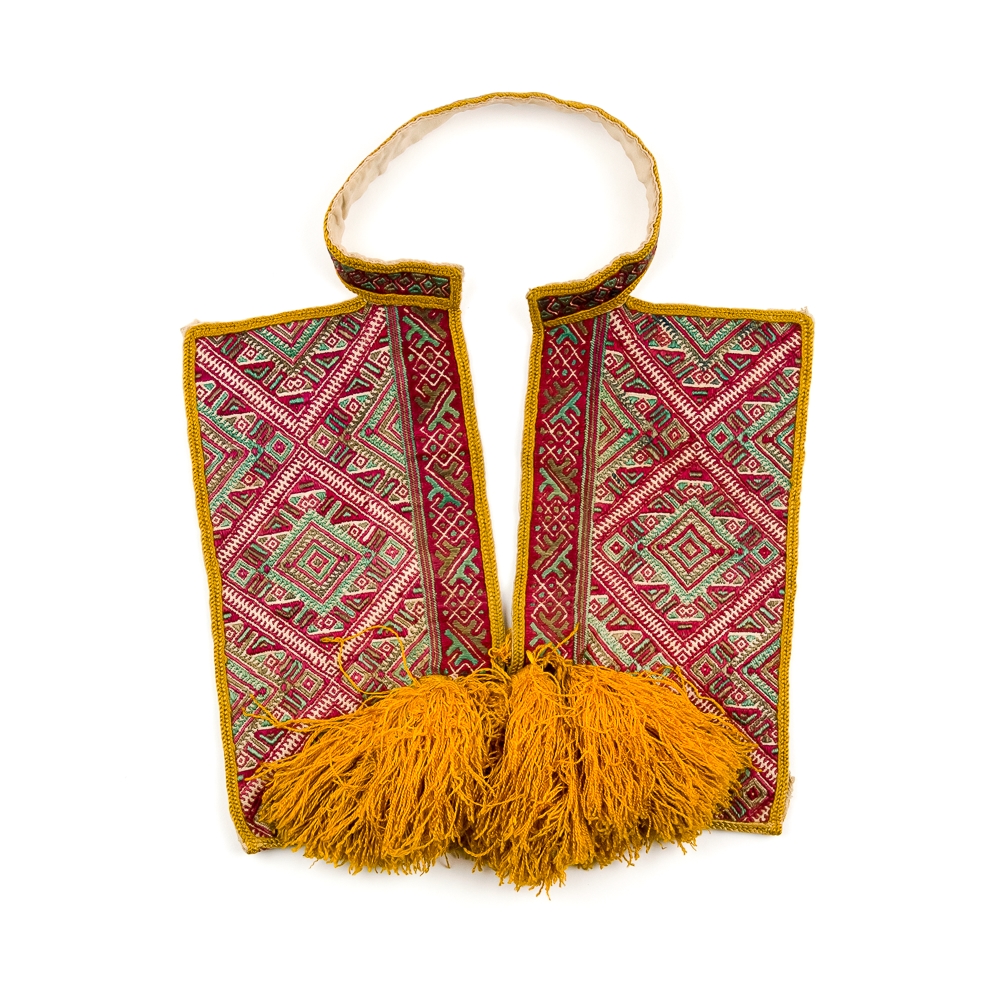
The core of the Collection consists of about ten items, mostly embroidery from women's shirts from Konavle - ethnographic material donated to the Museum in 1920 based on the will of Milko Cepelić, a priest from Đakovo, then about fifteen pieces of women's costumes from Konavle from the School Museum of the Croatian Pedagogic-Literary Assembly, and another fifteen such pieces from the Collection of Ethnographic Objects of the Trade and Crafts Museum in Zagreb. Its largest part consists of about two hundred mostly identical parts of costumes from the wider Adriatic region and its hinterland from the collection of the Museum founder Solomon Berger, as well as objects received from the Museum of Arts and Crafts in Zagreb. The Collection was then replenished with donations and acquisitions with the mediation of the trustees of the Ethnographic Museum and the efforts of Branimir Gušić, PhD, (Mljet, 1923), Jakov Mikac (Istria, 1931) as well as the Museum staff: Tereza Paulić (Krk, 1926 - 1931), Milovan Gavazzi (Krk, 1934), PhD, and Ivo Franić (Croatian Littoral, 1936). This Collection contains about 1,500 objects. The objects are classified by regions - the Istrian peninsula, the narrow coastline from the Croatian Littoral, through Dalmatia, to Dubrovnik and Konavle, and the following islands: Cres, Susak, Olib, Silba, Dugi otok, Ugljan, Pašman, Zlarin, Prvić, Šolta, Brač, Korčula, Mljet and Lastovo.
We use cookies to track visits to our pages (Google Analytics) for the purpose of improving the pages. The statistics are collected anonymously, and by accepting, you agree to the use of cookies. Find out more